BevAssets

Categories
Beverage Distribution Three-Tier System

How Beverage Brands Get Distribution in the U.S.

How Beverage Brands Get Distribution in the U.S.

Understanding the Three-Tier Distribution System

Beverage brands gain U.S. distribution by operating within the three-tier system, securing the proper federal and state licenses, demonstrating market demand or sales velocity, and partnering with distributors that align with their category, pricing, and execution strategy. Distribution success depends on readiness, margins, and a clear go-to-market plan rather than product quality or brand enthusiasm alone.

Beverage Distribution in the United States

Breaking into beverage distribution in the United States is one of the most misunderstood—and most critical—steps in building a scalable beverage brand. While product quality and branding matter, access to distribution ultimately determines whether a brand can grow beyond limited, local success.

In the U.S., most beverage alcohol brands do not sell directly to retailers or consumers at scale. Instead, they operate within a regulated framework known as the three-tier system.

The Three-Tier System Explained

The three-tier system separates the beverage alcohol market into three legally distinct roles:

1. Suppliers

Producers and brand owners, including distilleries, wineries, breweries, and beverage manufacturers.

2. Distributors

Licensed wholesalers responsible for warehousing, selling, and delivering products to retail and on-premise accounts.

3. Retailers

Liquor stores, grocery chains, bars, restaurants, and hospitality venues that sell products to consumers.

This structure exists to support regulatory compliance, tax collection, and market accountability. For most beverage alcohol brands operating at scale, distribution through licensed wholesalers is mandatory.

Why Distribution Is the Primary Growth Bottleneck

Many beverage brands assume that once a product launches, distributors will naturally show interest. In reality, distributors are highly selective and manage large portfolios with finite sales resources.

Distributors typically evaluate brands based on:

  • Expected sales velocity
  • Wholesale and retail margin structure
  • Evidence of consumer demand
  • Operational and supply-chain readiness
  • Market differentiation
  • Brand support and available funding

Without these fundamentals in place, even well-branded products often struggle to gain traction.

What Beverage Distributors Actually Want

Distributors are not brand incubators. They are logistics and sales organizations that prioritize portfolio efficiency and predictable performance.

From a distributor’s perspective, an attractive brand:

  • Solves a clear portfolio or category gap
  • Moves consistently off shelves
  • Requires minimal operational hand-holding
  • Is priced realistically for the market
  • Comes with a defined sales and execution strategy

Brands that understand and plan for these realities significantly improve their chances of securing and maintaining distribution.

Preparing Your Brand for Distribution

Before approaching distributors, beverage brands should ensure they have:

  • Federal and state compliance in place
  • Clear pricing and margin alignment
  • Defined target accounts and channels
  • A realistic launch and expansion plan
  • Sales materials that speak to distributor priorities

Approaching distribution without preparation often results in rejection—or a poor distributor fit that can limit long-term growth.

Choosing the Right Distribution Partner

Not all distributors are the same, and the largest distributor is not always the best fit.

The right distribution partner aligns with:

  • Your beverage category
  • Your target geography and accounts
  • Your growth timeline
  • Your sales execution needs

Strategic brands prioritize alignment and execution fit over reach, especially during early-stage expansion.

Why Strategy Matters More Than Product

A common misconception in the beverage industry is that a great product alone will secure distribution. In practice, strategy determines access, and access determines success.

Brands that invest early in go-to-market planning, distributor strategy, and sales execution consistently outperform those that rely on product quality or enthusiasm alone.

Closing Insight

Beverage distribution is not a one-time decision—it is a long-term strategic commitment. Brands that treat distribution as a core business strategy rather than a transactional step position themselves for sustainable, multi-market growth.

Yours, truthfully,

Sam

Categories
News & Insights

An Inch Wide, A Mile Deep: Why New Beverage Brands Should Master Rivers Before the Ocean

An Inch Wide, A Mile Deep

Why New Beverage Brands Should Master Rivers Before the Ocean

How many of you have heard the phrase “Build your brand an inch wide and a mile deep”? Maybe it popped up on LinkedIn between memes, or was tossed casually in a meeting by a seasoned distributor cradling a box of sample bottles. But for beverage pros, this isn’t just industry jargon, it’s survival advice. In this world, starting in rivers and lakes before jumping into the ocean can be the difference between becoming a local legend and getting lost at sea.

Start Where the Paddle Can Touch

Picture this: a canoeist representing a young beverage brand paddling along rivers and lakes, enthusiastically greeting the local bars, taverns, and mom-and-pop shops on the shoreline. In the distance, the wide ocean teems with massive, seasoned brands (yes, that’s a whale out there).

Why?

Because the deepest relationships, real velocity, and brand loyalty are built close to shore, not in open water.

The Tale of Two Launches: Storytelling from the Field

Let’s set the scene, two coming-of-age brand stories. One group, armed with spreadsheets and big ambitions, blitzes every store and city in sight, determined to conquer the sea. The other, “The Canoe Crew,” starts local, pours into the community, and becomes part of town folklore (like that time they hosted “Trivia Night with Banana Suits”). After six months, the blitzed brand is everywhere and nowhere. The local team? Rooted deep, requested by customers, actually poured, and part of the cultural fabric.

Growth: A River Runs Deep

Building Deeper Before Wider Pays More Dividends

Here’s how most beverage brands really grow their footprint:

  • The Local Stream (0–50 accounts): Early traction comes from relationships, hand-sells, tastings, and storytelling. These accounts are loyal, vocal, and create a ripple effect.
  • The Lake (50–500 accounts): Momentum builds. Distribution grows, awareness compounds, and early advocates become your local sales force. You’re not everywhere, but you’re everywhere that matters.
  • The River (500–1,500 accounts): Expansion meets consistency. You refine your execution playbook, identify hero SKUs, and master your market channels.
  • The Ocean (1,500+ accounts): Scale only works if you’ve earned depth first. Without that foundation, the brand gets washed out by the current.
Lesson: Start narrow. Build deep roots. Let gravity, not speed, carry your growth downstream.

Practical Wisdom: Build Deep with Smart Resources

So how do brands thrive locally and prepare the leap to broader waters? By investing resources and attention where it counts most.

Tastings & Sampling Events

The most-loved brands are the ones who bring the fun. Pop up tastings, themed local events, festival booths, these create memorable touchpoints that outlive generic shelf-talkers. Team up with agencies (Polaris, BevForce) and use humor, theme nights, or even costumes, turning every sampling into a story. 1

Distributor Incentives

Good distributor programs are like game shows, make success fun and memorable. Spot prizes for displays, contests for placements, or unique swag for folks behind the scenes keep everyone motivated and invested. 3

Point of Sale (POS) Magic

Ditch the boring displays. Go all in with shelf wobblers, QR contests, displays that snap for social, and limited-time art collabs. Remember: the mission is to get remembered, not just placed. 2

Team On the Ground

All the marketing in the world won’t replace a smile and a good story. A territory manager (with a knack for storytelling and good-humored banter) is your biggest local asset. 5

Ecommerce & Digital Spend

Digital efforts work best where you’re already known. Geotarget your digital spend, push for local online bundles, and run flash contests that drive locals to your site and back to brick-and-mortar partners. 4

Where New Brands Spend the Smartest

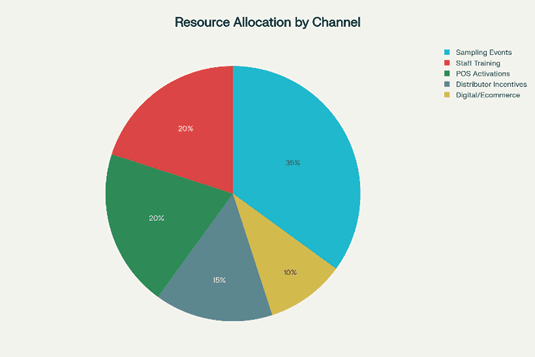
Wonder where the real magic happens in a brand’s early years? Here’s where the most successful allocate their resources: 

Where beverage brands put their early resources: heavy emphasis on sampling and staff engagement

Sampling Events: 35%
Staff Training/Engagement: 20%
POS Activations: 20%
Distributor Incentives: 15%
Digital/Ecommerce: 10%

It’s proof that depth is built face-to-face, on the street, and on the shelf, with the digital world amplifying it, not replacing it. 

Let Your Story (and Humor) Travel

Want to stand out? Own your quirks, like that awkward launch event with only your mother present, or the local bartender who “improved” your cocktail recipe and made it a legend. Share memes, post bloopers, and never be afraid to laugh at the growing pains; those stories will outlast any polished branding campaign. 6

The Lake, the River, and the Ocean

The truth: oceans are the domain of whales and sharks, the brands with data, dollars, and decades of proof of concept. If you’re new, start in the local streams and lakes. Build genuine fans, turn accounts into champions, and become the brand people talk about at trivia night.


Prove you can win at home first. When the tide turns, and opportunity calls, you’ll be sought after, not just another driftwood bottle among the waves.

Start small, dig deep, laugh often, and when it’s your time in the ocean, you’ll be ready to make legendary waves.


Truthfully,


Sam

Let’s Connect and Collaborate!

Fill in the details below to stay in the loop and let us know how we can serve your business.

[contact-form-7 id="f9ccc85" title="Pop up form"]