BevAssets

Categories
News & Insights

An Inch Wide, A Mile Deep: Why New Beverage Brands Should Master Rivers Before the Ocean

An Inch Wide, A Mile Deep

Why New Beverage Brands Should Master Rivers Before the Ocean

How many of you have heard the phrase “Build your brand an inch wide and a mile deep”? Maybe it popped up on LinkedIn between memes, or was tossed casually in a meeting by a seasoned distributor cradling a box of sample bottles. But for beverage pros, this isn’t just industry jargon, it’s survival advice. In this world, starting in rivers and lakes before jumping into the ocean can be the difference between becoming a local legend and getting lost at sea.

Start Where the Paddle Can Touch

Picture this: a canoeist representing a young beverage brand paddling along rivers and lakes, enthusiastically greeting the local bars, taverns, and mom-and-pop shops on the shoreline. In the distance, the wide ocean teems with massive, seasoned brands (yes, that’s a whale out there).

Why?

Because the deepest relationships, real velocity, and brand loyalty are built close to shore, not in open water.

The Tale of Two Launches: Storytelling from the Field

Let’s set the scene, two coming-of-age brand stories. One group, armed with spreadsheets and big ambitions, blitzes every store and city in sight, determined to conquer the sea. The other, “The Canoe Crew,” starts local, pours into the community, and becomes part of town folklore (like that time they hosted “Trivia Night with Banana Suits”). After six months, the blitzed brand is everywhere and nowhere. The local team? Rooted deep, requested by customers, actually poured, and part of the cultural fabric.

Growth: A River Runs Deep

Building Deeper Before Wider Pays More Dividends

Here’s how most beverage brands really grow their footprint:

  • The Local Stream (0–50 accounts): Early traction comes from relationships, hand-sells, tastings, and storytelling. These accounts are loyal, vocal, and create a ripple effect.
  • The Lake (50–500 accounts): Momentum builds. Distribution grows, awareness compounds, and early advocates become your local sales force. You’re not everywhere, but you’re everywhere that matters.
  • The River (500–1,500 accounts): Expansion meets consistency. You refine your execution playbook, identify hero SKUs, and master your market channels.
  • The Ocean (1,500+ accounts): Scale only works if you’ve earned depth first. Without that foundation, the brand gets washed out by the current.
Lesson: Start narrow. Build deep roots. Let gravity, not speed, carry your growth downstream.

Practical Wisdom: Build Deep with Smart Resources

So how do brands thrive locally and prepare the leap to broader waters? By investing resources and attention where it counts most.

Tastings & Sampling Events

The most-loved brands are the ones who bring the fun. Pop up tastings, themed local events, festival booths, these create memorable touchpoints that outlive generic shelf-talkers. Team up with agencies (Polaris, BevForce) and use humor, theme nights, or even costumes, turning every sampling into a story. 1

Distributor Incentives

Good distributor programs are like game shows, make success fun and memorable. Spot prizes for displays, contests for placements, or unique swag for folks behind the scenes keep everyone motivated and invested. 3

Point of Sale (POS) Magic

Ditch the boring displays. Go all in with shelf wobblers, QR contests, displays that snap for social, and limited-time art collabs. Remember: the mission is to get remembered, not just placed. 2

Team On the Ground

All the marketing in the world won’t replace a smile and a good story. A territory manager (with a knack for storytelling and good-humored banter) is your biggest local asset. 5

Ecommerce & Digital Spend

Digital efforts work best where you’re already known. Geotarget your digital spend, push for local online bundles, and run flash contests that drive locals to your site and back to brick-and-mortar partners. 4

Where New Brands Spend the Smartest

Wonder where the real magic happens in a brand’s early years? Here’s where the most successful allocate their resources: 
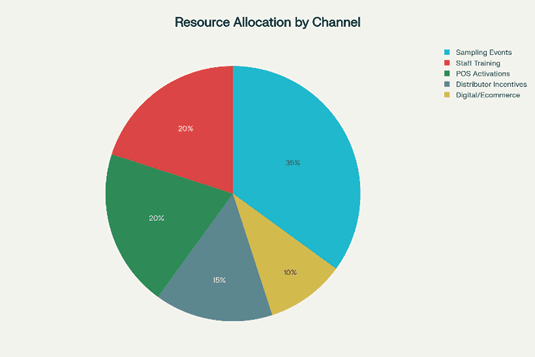
Where beverage brands put their early resources: heavy emphasis on sampling and staff engagement

Sampling Events: 35%
Staff Training/Engagement: 20%
POS Activations: 20%
Distributor Incentives: 15%
Digital/Ecommerce: 10%

It’s proof that depth is built face-to-face, on the street, and on the shelf, with the digital world amplifying it, not replacing it. 

Let Your Story (and Humor) Travel

Want to stand out? Own your quirks, like that awkward launch event with only your mother present, or the local bartender who “improved” your cocktail recipe and made it a legend. Share memes, post bloopers, and never be afraid to laugh at the growing pains; those stories will outlast any polished branding campaign. 6

The Lake, the River, and the Ocean

The truth: oceans are the domain of whales and sharks, the brands with data, dollars, and decades of proof of concept. If you’re new, start in the local streams and lakes. Build genuine fans, turn accounts into champions, and become the brand people talk about at trivia night.


Prove you can win at home first. When the tide turns, and opportunity calls, you’ll be sought after, not just another driftwood bottle among the waves.

Start small, dig deep, laugh often, and when it’s your time in the ocean, you’ll be ready to make legendary waves.


Truthfully,


Sam

Categories
News & Insights

Why the Tortoise Wins: Slow, Steady, and the Real Formula for Lasting Beverage Success

Why the Tortoise Wins:

Slow, Steady, and the Real Formula for Lasting Beverage Success

Raise your hand if you know someone who snagged 50 new placements last month and blew up your LinkedIn feed celebrating it. Buzzwords fly. “Crushing it!” “Domination!” “Disrupting the shelf!”

A few months later, though? The buzz is gone. Bottles are gathering dust. And that founder? Nowhere in sight when the reset wipes the slate clean.

Here’s the real talk: This industry is packed with hares, those racing for flashy wins and falling flat when their brands vanish at the next reset. But the beverage leaders of 2025? They’re tortoises. They build what lasts. They transform placements into repeat velocity, becoming must-haves, not just one-hit wonders.

Even in the beverage industry, slow and steady still wins the race.

Takeaways Up Front

  1. Placements don’t build brands, velocity does. Shiny scorecards fade, but reorderPlacements don’t build brands, velocity does. Shiny scorecards fade, but reorders create long-term value and shelf security.
  2. Support matters more than shelf space. Ongoing activation, training, and account nurturing move product and build loyalty.
  3. Velocity and reorder data, not door counts, predict who thrives post-reset. The brands who treat each account as a relationship, not a conquest, win the marathon.

The Allure (and Trap) of Vanity Metrics

Everyone wants to hit triple-digit PODs. The PowerPoint decks balloon, the metrics rack up, and the “shelfies” rain down. But behind those numbers is the only statistic that matters: what percentage of those placements reordered last quarter? The data is clear: headlines make noise, but only supportive, quality distribution makes a brand a contender for acquisition and long-term shelf survival.

Slow-moving brands gather dust, while engaged staff and creative activations move cases—and win reorders.

The Data Says: Support Wins

In 2025, new beverage segments are upending old norms:

Year-over-year growth by beverage segment in 2025. NA beer leads all categories

NA beer and THC beverages are booming, but only when brands pair placements with robust support. Traditional spirits and wine brands? If they don’t pivot from “set and forget” to “support and sell-through,” reset risk multiplies. Growth means nothing if bottles collect dust, especially with functional and nonalcoholic categories surging.

The Tactics of the Steady Winner

The best brands, regardless of category, have a playbook for velocity:

  • Staff Education: Memorable, practical training for staff, never just a deck or product dump.
  • In-Market Activations: Demos, digital campaigns, and events that make the product come alive for customers… and for staff too.
  • Ongoing Rep Engagement: Regular check-ins with distributors and field teams. The brands who show up, sell through.
  • Data-Driven Action: Velocity dashboards catch slow accounts fast, so support is always proactive.

Brands that invest in in-store demos and ongoing support don’t just get placements—they get advocates and reorders.

Average reorder rates by beverage segment in 2025. NA and THC beverages outperform traditional categories

NA and THC brands build reorder loyalty by offering more than just product , they offer partnership, education, and creative field engagement. That’s what drives these higher reorder rates.

Playing and Surviving the Reset Game

Reset season is brutal. Often, it’s the brands who looked unstoppable at launch that get delisted, while slow-and-steady winners build permanent homes on the shelf:

Shelf reset survival rates in 2025. NA beer and THC beverages maintain the highest survival

In 2025, data shows over 60% of RTD, THC, and nonalcoholic launches that didn’t hit their velocity and reorder targets were cut during resets, no matter how massive their initial push.

The Tortoise’s Toolbox: Resources for Durable Brands

Real competitors make it part of their DNA to support and empower every account. Here’s where to start:

Final Word: Run the Race That Matters

Celebrate every win but know what matters most. When the applause fades, will your brand be quietly racking up reorders and drawing loyal support? Or will it be another lesson in how not to build a beverage business.


If you want compounding wins, train your team, support your partners, and treat every POD as the beginning of a relationship, not a finish line.

Here’s to the steady, durable, and supportive, the beverage industry’s real winners.

Cheers to realignment and greater success!

Sam Anderson, BeverageManSam

- Sam Anderson


Just Pick Up The Phone 📞

Empowering individuals through meaningful connections, one person at a time.


Co-Founder BevAssets.com

Categories
News & Insights

Beyond the Ingredient List: Why Winning Beverage Brands Start with Consumer Desire

Beyond the Ingredient List

Why Winning Beverage Brands Start with Consumer Desire

Walk into any beverage brainstorm today and you’ll hear the same debate: what matters more, what’s in the bottle or what the drinker actually craves? Truth is, both matter, but not equally. Ingredients can win headlines, but consumers decide who wins shelf space. The brands crushing it in 2025 are the ones that marry clean, functional decks with irresistible taste, cultural resonance, and a story that actually makes people care.

Ingredients Matter (But People Matter More)

Let’s be clear: ingredients are table stakes. Nobody’s launching a new soda, kombucha, or spirit with mystery chemicals and hoping for the best. Clean labels, plant based boosts, adaptogens, probiotics, protein if it’s buzzy and functional, it’s either already on the market or about to be. Transparency isn’t a trend anymore; it’s an expectation.

According to fresh 2025 data, three out of four consumers are seeking drinks that check at least one of these boxes: healthier, cleaner, more sustainable. That’s not a nice-to-have—it’s survival.

Why so much focus? A few reasons:

  • Wellness Everywhere: Consumers want their drinks to support immunity, focus, digestion, and energy. That’s why you’re seeing probiotic sodas, adaptogenic teas, prebiotic waters, and protein hybrids flooding the shelves.
  • No More Mystery Labels: Millennials and Gen Z can and will Google your ingredient list before they buy. Traceability isn’t marketing fluff anymore, it’s mandatory.
  • Personalized Vibes: Drinks are now lifestyle accessories. Morning boosts, on-the-go hydration, evening wind-downs—products slot into daily rituals and social moments with precision.

The Industry Trap: Overthinking Ingredients

Here’s where it gets tricky. Some brands are so obsessed with perfecting the “functional holy grail” that they forget to ask the only question that matters: will anyone actually want to drink this?

We’ve all seen it, launches packed with exotic botanicals, obscure minerals, or “superfoods of the month” that nobody really connects with. Innovation without consumer insight is just a costly science project.

The drinks that actually break through focus on why people drink:

  • A taste of indulgence or nostalgia
  • A little mood lift or escape
    Global flavors that feel like travel in a can
  • Instagram-worthy colors, aromas, and textures
  • Or just…comfort, plain and simple

Take Spindrift. They didn’t reinvent water; they just leaned into recognizable ingredients and made them sparkle (literally). Or RTDs riffing on dirty sodas and espresso martinis – equal parts novelty, nostalgia, and TikTok virality.

The 2025 Ingredient Playbook

Five forces are shaping what’s in our cups this year:

  • Functional Hydration
    • Water isn’t just water anymore. Drinks are loaded with electrolytes, plant proteins, adaptogens, and botanicals like ginger, turmeric, and ashwagandha. If it doesn’t multitask, it doesn’t make the cut.
  • Adventurous & Global Flavors
    • Think yuzu spritzers, tamarind sodas, dragon fruit teas. The magic is in balancing exotic flair with something familiar (pineapple-ginger prebiotic soda, anyone?).
  • Nostalgia Meets Social Media
    • TikTok can turn a quirky flavor into a nationwide sellout overnight. Dirty sodas, creamy ‘90s throwbacks, candy-inspired hydration powders, if it hits both tastebuds and memory banks, it wins.
  • Sustainable & Local
    • Provenance is the new premium. Whether it’s a hyper-local beer brewed with regional grains or a gin made with foraged botanicals, the closer to home (and greener the footprint), the better.
  • Premiumization & Customization
    • Consumers will pay more for products that feel elevated. Ingredient callouts (“featuring organic ashwagandha”) and premium packaging signal quality, while flavor flights and custom kits give drinkers a sense of ownership.

What Actually Works

So what’s the formula? It’s not rocket science (though sometimes it feels like it). The winning moves are:

Start with the consumer, not the lab.

Use social listening, surveys, even DM feedback loops to hear what people want.

Test fast, fail cheap.

Prototype, sample, refine. Don’t wait until you’ve sunk millions into a formula that no one likes.

Balance function with fun.

Your adaptogens are useless if the drink tastes like grass clippings.

Tell a story worth repeating.

Ingredient decks don’t sell themselves—stories do. Show the origin, the vibe, the why.

Tools & Partners to Speed It Up

  • Consumer Intel: Platforms like Tastewise or NielsenIQ are goldmines for real-time trend tracking.
  • Agile R&D: Flavor houses like Flavorman are helping brands pivot fast without losing steam.
  • Transparency: Digital tools now make it easy to show sourcing and sustainability in real-time.
  • Ingredient Partnerships: Co-brand with functional heroes or upcycled ingredients for built-in credibility.

The Bottom Line

In 2025, ingredients matter more than ever, but only if they serve the bigger story. Winning brands aren’t chasing the latest superfruit; they’re building drinks that connect emotionally, culturally, and experientially.

The future of beverages is about curiosity, listening, and optimism. Every sip should feel like an answer to a consumer’s unspoken question: what do I actually want right now?

If you nail that, the ingredient list becomes the supporting actor, not the star.

Let’s connect and build your 2026 strategy.

Cheers to realignment and greater success!

Sam Anderson, BeverageManSam

- Sam Anderson


Just Pick Up The Phone 📞 | Joy 🦋

Empowering individuals through meaningful connections, one person at a time.


Co-Founder BevAssets.com

Let’s Connect and Collaborate!

Fill in the details below to stay in the loop and let us know how we can serve your business.